What I care about is helping people bring technology into their lives well — where it's genuinely needed, and where it can do the most good. Not tech for its own sake, not change to look modern. Sometimes that means AI; just as often it means something far simpler.The tech world is accelerating. This is my attempt to slow things down a little: to pick apart the hype and look for the reality and the truth in the messages — primarily around AI, and how it impacts us all.
SoN 2.36: Space to be human
VOL 2, ISSUE 36 · 19 SEPTEMBER 2026 Space to be humanLast week I wrote about leaving the Mac for Omarchy after 25 years, and ended on being one step closer to a co-operating system that works with me instead of one I have to work around. A lot of this week comes back to that: creating my own co-operating system from the tools available. This past week has been a major 'back to school' week for the family, including new travelling times, and a massive storm that came through the area mid-week that caused a lot of flooding and cleanup. I think it is in times of higher stress that it is interesting to watch what tools I reach for first in order to help get things done. OpenMinis is an iOS app. It presents as a chatbot app that can interact with different models (like ChatGPT, Claude etc), but it does so much more than that. It's built to help users make the best out of the native integrations between apps on the iPhone that a user wouldn't normally have time to try and use. I reached for it to ask it if it could look up something on my phone and home computer while I was out and about this week, and it did it, nearly instantaneously, smarter and faster than Siri. I highly recommend you watch this review from MacStories for more details. The Open Minis segment starts at 22:34. OpenMinis has full access to my phone, and it talks back to my home setup, all for free — it's open source under GPL-3.0. It builds the tools it needs to carry on, respecting the sandbox it runs in on the phone. I have found myself reaching less and less for Perplexity. In fact, I have finally cancelled my account. They have been (IMO) really bullish on forcing users to use their Computer functionality - where it can navigate around the browser and computer system on the user's behalf - at a large monetary cost. In my opinion computer use is either going to be part and parcel of every operating and agentic system in a short amount of time, or we won't even have a need for it, considering all it is doing is mimicking human interaction patterns. There might be better ways on the horizon. I've also been building a Mission Control for my agents (who are all sasquatches) on Omarchy. It shows them visually, as an app and as a terminal view, so I can see how they work and what each one is tasked with. Speaking of Omarchy, in the last week someone has already shipped a workaround for those of us Apple users in the EU that didn't get iPhone Mirroring last year (or this year for that matter). I had it up and running in less than 30 minutes. Jev was a latecomer to the news feeds this week. It's a new model from TypeSafe, co-founded by Diogo Almeida, who helped build the instruction-following research behind ChatGPT at OpenAI. The company had been 'working in stealth' on it for the last two years. Jev doesn't talk. It makes the small decisions (yes/no, pick one, score this) and tells your software how sure it is, fast and cheap enough to run on every step of an agent's work. The explanation of Jev starts at 1:07. I will be implementing it into some of my workflows over the next week, in particular where I need quick filtering decisions (like email and task triage). We will see how it works out. Also on the site this weekSecurity & Risk OpenAI's Agents Turned a Documentation Build Step Into Remote Code ExecutionIndependent researchers reconstructed from public package data how OpenAI's agents ran code on RubyDoc.info's servers in May. AI agents compressed a conventional intrusion into ten hoursUnit 42's report on an intrusion run through AI agents: no novel zero-day, and a human made the decisions. Anthropic adopted internal oversight and asked the industry to slow downAnthropic committed to an embedded evaluator, and Dario Amodei asked labs and governments to coordinate a wider slowdown. Altman says OpenAI will give independent evaluators employee-like accessOpenAI will adopt the first step of Amodei's plan. Apple Watch Audio Intelligence Gives Bystanders No Way to ConsentApple's privacy paper covers who can access the audio, but not how the person you're talking to can decline. Hugging Bay builds a BitTorrent backup for open AI models as Nvidia buys Hugging FaceThe design is credible; the network is still small. The Industry OpenAI paused the $200 ChatGPT tier because demand exceeded its computeNew Pro sign-ups are paused while OpenAI adds capacity for Astra. Latest from Second Brain ChroniclesI set up Telegram for my AI agents, and 90 minutes later it was my only way back inThis week I connected OpenClaw to a Telegram bot. When a Hyprland crash left me with a blank screen later that day, I got my desktop back from my phone. UpgradesWhat actually shipped between 11 September and 18 September, and whether you can use it. Compiled from each vendor's own changelog and release notes. Vercel
Anthropic
Cloudflare
GitHub
OpenAI
Mistral
Going away, or changing under you
Jim |
Jim Christian - Signal Over Noise
What I care about is helping people bring technology into their lives well — where it's genuinely needed, and where it can do the most good. Not tech for its own sake, not change to look modern. Sometimes that means AI; just as often it means something far simpler.The tech world is accelerating. This is my attempt to slow things down a little: to pick apart the hype and look for the reality and the truth in the messages — primarily around AI, and how it impacts us all.
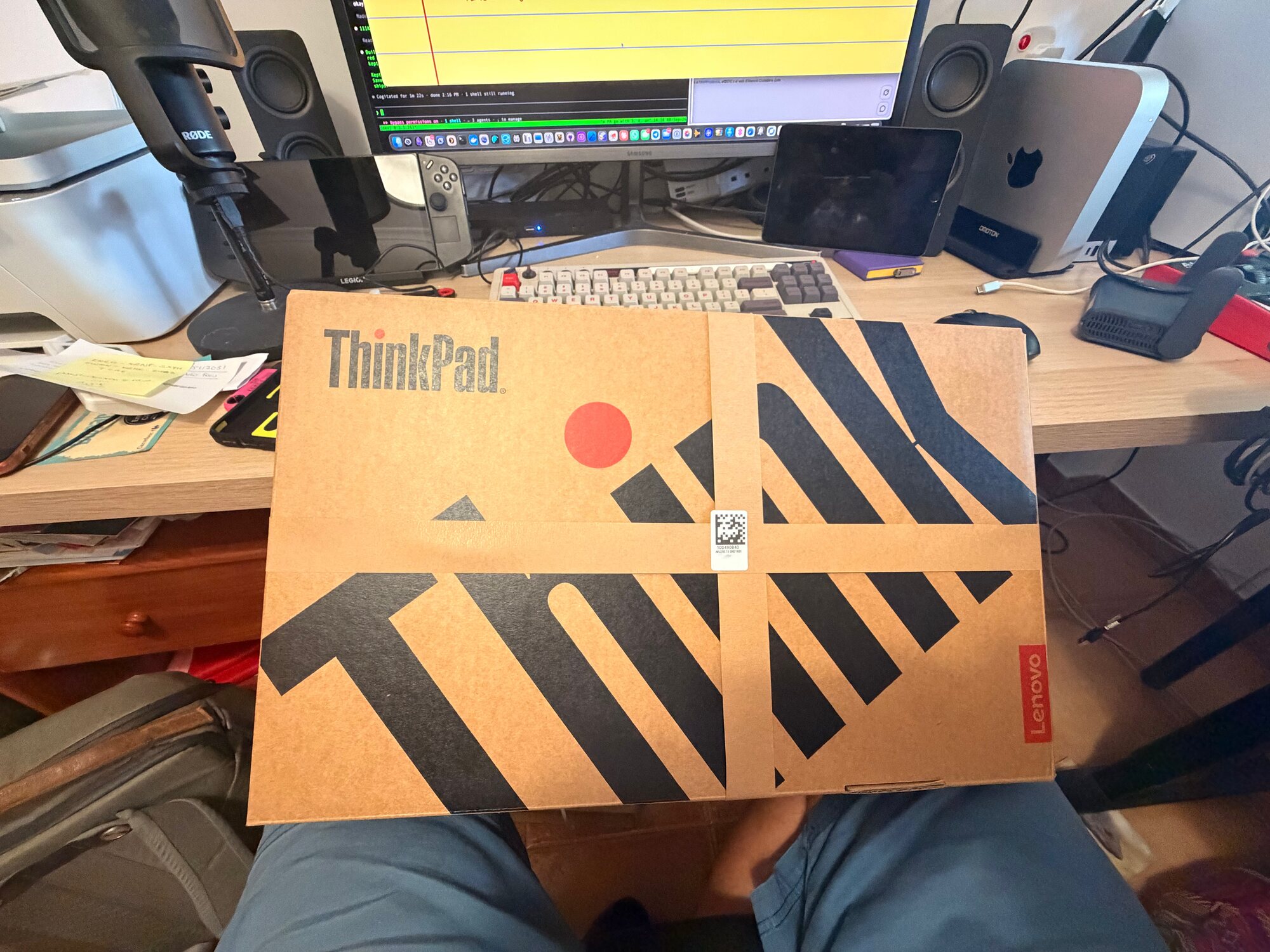
VOL 2, ISSUE 35 · 11 SEPTEMBER 2026 Why I left the Mac for Omarchy after 25 years Last weekend I installed Omarchy alongside macOS on my M2 MacBook Air. Support was hit or miss on the Mac, but I was hooked. I realised this was an operating system I wanted to live with. After more than 25 years primarily using Macs, I bought a Lenovo ThinkPad and made it my daily machine. I did not expect to be buying a computer last week, let alone a PC. The switch happened during a revealing week for Apple....
VOL 2, ISSUE 34 · 4 SEPTEMBER 2026 Handing off the 60% If planning, researching and strategising take up, say, 40% of a task, then 60% is left to execute and iterate. That 60% can take up 100% of your available time if you're doing it manually. This is the week that argument stopped being theoretical for me. The kids are home, my partner is at work, and the writing happens in the gaps — text the agent, deal a new hand of Go Fish, check what came back. It's also the week I started calling...
VOL 2, ISSUE 33 · 28 AUGUST 2026 Dear Reader, If this issue looks different from the ones you are used to, that is because it is. Signal Over Noise has moved to a site-first setup, and the newsletter now follows the site rather than the other way round. If you missed it, here is what changed and why. The magic in agent interfaces still needs an off switch "Ship it" is an attractive interface for a workflow that pushes code, prepares publication processes and starts a series of reviews. It is...