What I care about is helping people bring technology into their lives well — where it's genuinely needed, and where it can do the most good. Not tech for its own sake, not change to look modern. Sometimes that means AI; just as often it means something far simpler.The tech world is accelerating. This is my attempt to slow things down a little: to pick apart the hype and look for the reality and the truth in the messages — primarily around AI, and how it impacts us all.
SoN 2.37: Dumb Little Robots, All the Way Down
VOL 2, ISSUE 37 · 5 OCTOBER 2026 It's been two weeks since the last issue. Life has got in the way, and family has taken precedence. This issue leads with two pieces about the same idea: break the work down, and give each piece what it needs. Dumb Little Robots is about an agent that got confused because it was given every job at once. The difference between skills and context is about separating the instructions for a job from the material that goes into it. Dumb Little Robots, All the Way DownA team I spoke to recently built an analyst agent and gave it the whole job: bring the data in, analyse it, report on it. Its operator barraged it with questions. Its brain was full. The context window filled, the tokens were used up, and it lost track of what it was for. Anthropic's guide to context engineering describes a related effect: "as the number of tokens in the context window increases, the model's ability to accurately recall information from that context decreases." Chroma tested 18 models and found performance "grows increasingly unreliable as input length grows." I told the team to think of agents as dumb little robots all the way down. One agent pulls data from a domain, one normalises it, one analyses it, one formats the data, one formats the PowerPoint. An agent might take two of those jobs, but you don't give it everything in one go. I covered decomposition in The Art of Breaking Things Down and it needs repeating, because enterprise teams are still being sold AI as the number one problem solver you can throw everything at. Five small agents means four handoffs, and someone has to check them. Each agent needs a person who owns it, understands it and takes responsibility for how it performs. Any system a team builds should have that accountability anyway. These things are only as good as we program them to be. An agent that gets confused may simply have been given too many jobs. The difference between skills and contextOn 2 October I posted Stupid Gemini Tricks, a Gemini Gem I built for a U of Digital AI accelerator training. It makes a one-panel cartoon in the style of the New Yorker or The Far Side, and it took about two hours and a lot of iteration to get the prompt and context right. The skill is the doing: the instructions for building the thing. The Gem's instructions say "Act as a veteran magazine gag cartoonist and creative editor," then tell it to pitch two or three concepts or punch up a gag the user already has, confirm the style, and then generate the image with the caption beneath the panel. Anthropic's documentation for Agent Skills says that "unlike prompts (conversation-level instructions for one-off tasks), Skills load on demand, so you don't have to repeat the same guidance across conversations." The context is the contents: the things that go into a particular job. The Gem carries a style reference guide, with the New Yorker's "dip-pen and black ink with soft watercolor/wash shading" and the Far Side's "1980s retro muted print tones." The user brings the topic or the gag. The context is the ingredients on the counter, the skill is the recipe card, and the model is the cook. Anthropic defines skills as "reusable, filesystem-based resources" that hold "workflows, context, and best practices", so the style guide can travel with the skill. When Claude loads a skill, its instructions enter the context window too. Also on the siteMeta's Muse asks for a lot of trustMeta's Muse agent connects to your email, calendar, payments and health services, trains on your conversations by default, and has already shared a user's home address with a Marketplace buyer. OpenClaw versus PaperclipI tried OpenClaw to coordinate agents from a Rabbit R1 and it turned into engineering for engineering's sake. I went back to Paperclip, and it is getting a lot better. The Importance of Being JevTypeSafe's Jev and Cloudflare's Clef return a yes or a no, a one or a zero. They are for questions with a fixed set of answers, such as whether an email is urgent. OpenAI's DevDay is a pile of announcements, for nowThe Decisions API looks good, a few things need testing, and Pro 500 set the cat amongst the pigeons. I prepared my Q3 tax pack on a £6-a-month serverI prepared my Q3 tax pack with Actual Budget and Invoice Ninja, self-hosted on a £6.05-a-month VPS, and my agents did the reconciling. Everything That Was Announced During Cloudflare's Birthday WeekCloudflare published nearly 40 posts for its 2026 Birthday Week. Here is which ones change something for a business that runs a website or pays for AI, what to do about each, and which you can skip. Stupid Gemini Tricks: One Panel ComicsA quick and dirty Gemini Gem demo on creating one-panel comics. They're the same videoOpenAI's new 'Get things done with voice mode' video is oddly similar to this SNL parody. What I'm buildingSquatchwarePixel-powered apps, tools and themes, handmade in the woods. Out now: omaplex, issquatch and 14 themes. Soundsquatch is still in the workshop. Sleight of DevWebsites and web apps for businesses and performers. Jim |
Jim Christian - Signal Over Noise
What I care about is helping people bring technology into their lives well — where it's genuinely needed, and where it can do the most good. Not tech for its own sake, not change to look modern. Sometimes that means AI; just as often it means something far simpler.The tech world is accelerating. This is my attempt to slow things down a little: to pick apart the hype and look for the reality and the truth in the messages — primarily around AI, and how it impacts us all.
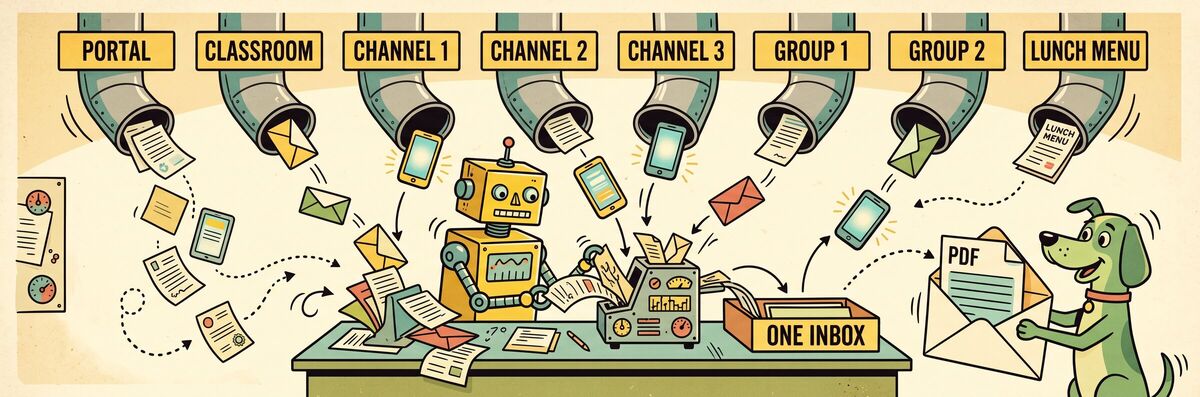
VOL 2, ISSUE 39 · OCTOBER 2026 Last week I started using Cloudflare OS to build a family knowledge base: a one-stop shop for everything about our kids’ timetables, homework, extracurricular activities, lunch menus and more. This information comes through two or three dedicated apps (one with broken notifications, another that nobody seems to use consistently), plus WhatsApp, Telegram and probably three or four apps that haven’t been invented yet. So it’s a no-brainer for me to turn to...
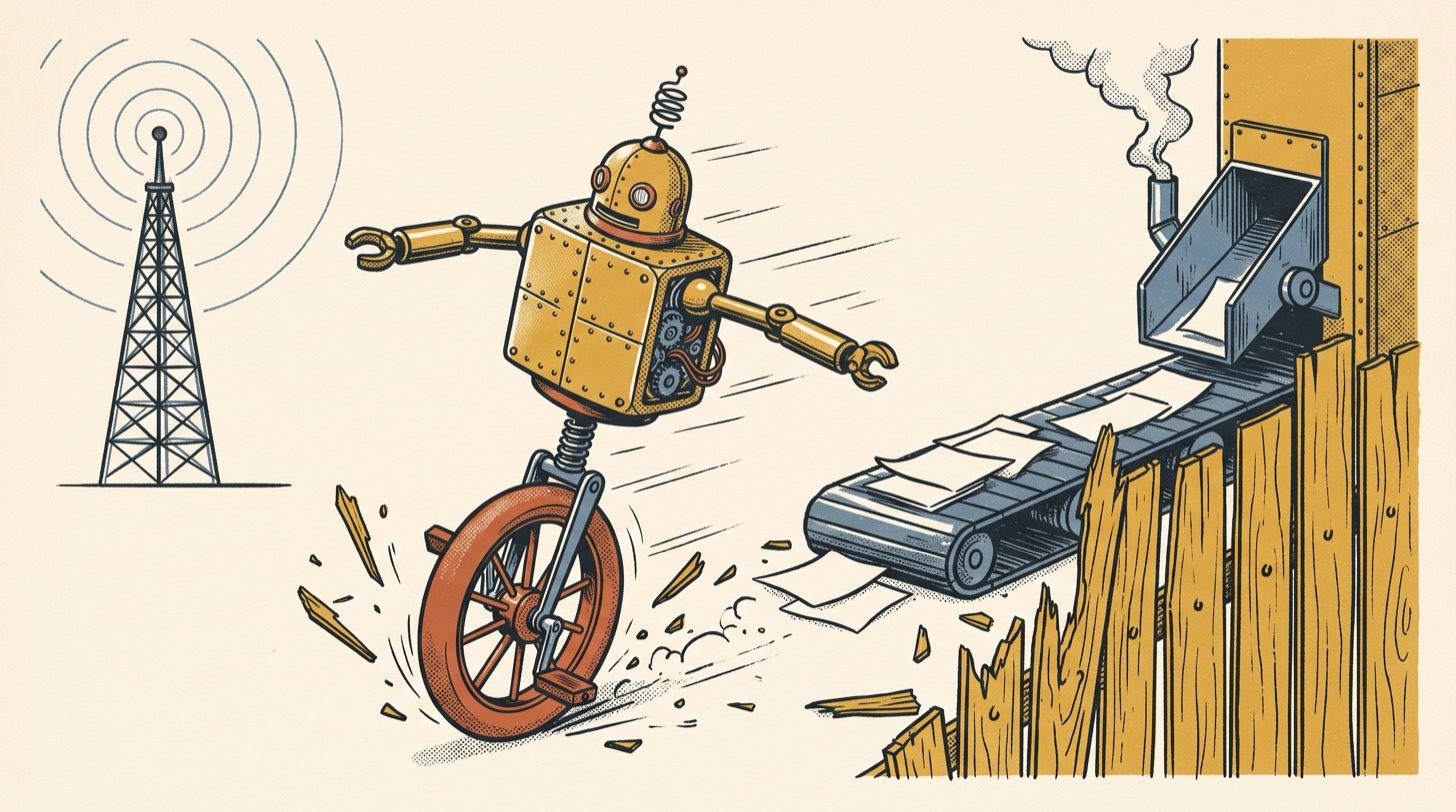
VOL 2, ISSUE 38 · OCTOBER 2026 A lot of the conversation around AI right now skips clean past the plumbing. We get handed shiny new tools, watch a few polished demos, and immediately expect software to behave like an omnipotent wizard that sorts our working lives out overnight. When it inevitably stumbles, the blame usually falls on the model’s raw intelligence rather than our own instructions. But whether you are trying to automate a runaway inbox, teaching an agent how to complete a web...
VOL 2, ISSUE 36 · 19 SEPTEMBER 2026 Space to be human Last week I wrote about leaving the Mac for Omarchy after 25 years, and ended on being one step closer to a co-operating system that works with me instead of one I have to work around. A lot of this week comes back to that: creating my own co-operating system from the tools available. This past week has been a major 'back to school' week for the family, including new travelling times, and a massive storm that came through the area mid-week...