SoN Vol 2, Issue 11: The Helpers (Free Edition)


Vol 2, Issue 11 | Mar 18 2026
APIs, CLIs and connectors are the real enablers of AI agency

Dear Reader,

Every impressive AI demo you’ve seen — the ones where it books flights, sends emails, updates spreadsheets, monitors systems — none of that is the AI model being clever. The model is having a conversation. What makes it useful is a layer of quiet plumbing nobody talks about — the connectors that let it reach past a chat window and actually affect the world.

Things like Application Programming Interfaces (APIs) — staff entrances that let software talk directly to software, skipping the visual interface. Command-Line Interfaces (CLIs) — text-based controls that let you (or your AI) operate tools by typing commands instead of clicking through menus. Webhooks — notification systems that let one tool tap another on the shoulder and say “something just happened.” Let’s call them helpers — and they’re the connectors that let AI reach beyond a chat window and actually do things.


One weekend, nine schools

Over the weekend I had a real research project on my hands — secondary school selection for our eldest. We live in Spain, which means navigating a system where some schools are free public, some are state-subsidised private, some are fully private, and one is British curriculum. Reviews are scattered across Spanish-language platforms I’d never heard of. The admissions process runs through a points-based system published in the regional government’s official gazette.

Nine schools, four school types, seven priority criteria — and a bureaucratic system in a language that isn’t my first.

The old way? A week of evenings, dozens of browser tabs, Google Translate on every page, and a spreadsheet that starts optimistic and ends chaotic. Instead, I wrote structured research prompts and ran them through Perplexity. By lunchtime I had detailed profiles on all nine schools — reviews, fees, staff listings, government registration details.

But AI research tools can be confidently wrong. So that afternoon I built a wrapper — a simplified interface — around Cloudflare’s Browser Rendering API and pointed it at all nine school websites directly, fact-checking what Perplexity had told me.

Good thing I did. One school Perplexity said was primary-only had been offering secondary since 2025. Another supposedly had no canteen — their website had weekly lunch menus published. A third school’s web domain had been killed after a corporate acquisition, which Perplexity hadn’t flagged at all.

Nine schools researched, fact-checked, and compared — all before dinner. Not because the AI was magic, but because the helpers were there.

That same evening, I upgraded to the Cloudflare Workers Paid plan. Five dollars a month. By late that night I had a health check system monitoring five of my websites every six hours, storing results in a database, and sending me Telegram alerts if anything went down.

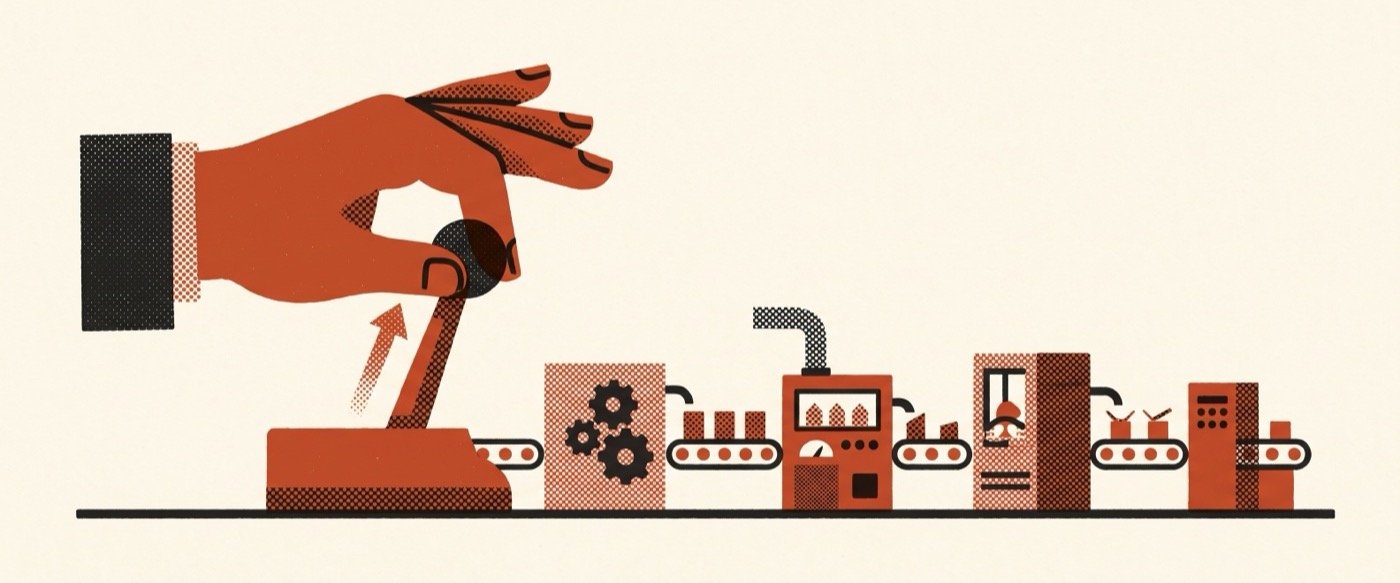
None of that was the AI. The AI wrote the code, but the reason any of it actually worked was the helpers — Cloudflare’s API letting me deploy code from my terminal, their database service storing the results, n8n’s webhook catching the alerts, Telegram’s bot API delivering them to my phone.

Take any one of those away and the AI is just generating code that sits in a file. Add them back and it’s a system that runs while I sleep.


What’s in the full issue

This week’s full issue includes a plain-language guide to every type of helper — what APIs, CLIs, webhooks, and Model Context Protocol (MCP) servers actually are, how to find out which of your tools already have them, what they can do, and how to handle security when connecting them. It walks through the helper chain step by step, covers why the integration layer is the real moat (not the AI model), and gives you a concrete starting point for building your first chain.

Paid members also get two interactive tools built for this issue: the Helper Finder (enter your tools, see which helpers each one has) and the Tool Audit (map the connections between your tools and spot integration opportunities). They’re the practical companions to the ideas in this issue — try them with your own stack.

This is what Signal Over Noise looks like from the paid side: real builds, honest timelines, implementation detail, and hands-on tools that turn “I should try AI” into “I built something that runs.”

Read the full issue — subscribe to Signal Over Noise →

€7/month or €69/year. No sponsors, no affiliate deals — just honest, tested AI implementation work.


Until next time,

Jim


€7.00 / month

AI Signal Over Noise

Skip the AI Hype.
Practical AI for people running a business, not studying it. I'm Jim Christian. I write about using AI... Read more

Signal Over Noise is weekly, reader-first publication on AI "without the hype" published by Jim Christian. If you've been forwarded this issue, you can subscribe here: go.signalovernoise.at.

600 1st Ave, Ste 330 PMB 92768, Seattle, WA 98104-2246
Unsubscribe · Preferences

Jim Christian - Signal Over Noise

Practical AI for people running a business, not studying it. I'm Jim Christian. I write about using AI with no breathless futurism, and no doom.

Read more from Jim Christian - Signal Over Noise
A cream-coloured chart headed "Five words for the same thing", listing five numbered rows. Prompt and Context are numbered in teal and tagged START HERE; Agent and Workflow are greyed and tagged LATER; Graph is greyed and tagged MOST NEVER NEED IT. Each r

Field Note: Five words for the same thing At the moment there are no fewer than five phrases going round that all describe the same work, and if you’re trying to work out which one to learn first, I have good news. The phrases are: - Prompt engineering - Context engineering - Agent engineering - Workflow engineering - Graph engineering They aren’t five subjects. Rather, they’re five views of the same system, and they overlap more than the names suggest: Prompt engineering is what you type....

Second Brain Chronicles Update Dear Reader, First off, my apologies for not posting in a long time. When I started Second Brain Chronicles as a newsletter, it was more out of enthusiasm for this cool thing that I was building, and wanted to share with the world, alongside other creators and tinkerers with the same goal. I'd toyed with gating content, monetising content, and it just didn't feel right, nor did the current kit.com method of distribution. But it came down to this: the field is...

Signal Over Noise Vol 2, Issue 30 | Jul 31 2026 Don’t have time to read this week’s issue? Why not copy/paste it into your AI agent and ask it for insights? Last week I told you to give your AI a writing system, citing ASD-STE100, the controlled English that the aerospace industry built in the 1980s so its instructions couldn’t be misread. I said that complaining your AI “sounds like AI” is pointless if you never told it how to write. Three days later Anthropic published a piece saying they...