Vol 2, Issue 8 | Feb 25 2026
What AI actually did while I was at the beach.
Dear Reader,
Using AI helped me save £172.80 last weekend, but not on its own, and not on my own.
Two conversations, one weekend
On Saturday afternoon I was triaging my emails and made a quick note to myself: check whether purchasing a Virtual Private Server (VPS) from my current web host would be cheaper than the other server I was paying for to run n8n, my automation platform. I asked Claude to research the pricing, and it came back with an accurate comparison — my web host was 50 to 70 percent cheaper at equivalent specs. Interesting, but not urgent. I filed the thought and moved on.
Later that evening I was working on something completely unrelated — a new website project I've been working on needed a new domain name, and an SSL certificate. SSL certificates on my web host cost £65 per year per domain, compared to the domain name cost, which was only £9. For a small project, that didn't seem worth it and I was ready to keep it on a subdomain instead.
But Claude had been in both conversations — the VPS pricing research from the afternoon and the domain registration that evening. It made a connection I hadn't: if I moved everything to a VPS, I could use Let's Encrypt for free SSL certificates. Not just for the new site, but for all twelve of my domains. The same migration that would save me money on hosting would also eliminate every SSL certificate cost I was paying.
That single connection — VPS research from one conversation informing a decision in another — is the thing that made the win at the end of my weekend possible. And it's the thing that wouldn't have happened if I'd been using AI the way most people use it, which is one question at a time, starting from scratch each session.
Saturday night was planning
Once I saw the full picture, the rest of Saturday night was working with Claude to come up with an architecture plan. Which domains go where, what the routing should look like, wildcard SSL versus individual certificates — and what order to migrate in so nothing breaks mid-flight. I ended up with seven migration scripts, a step-by-step runbook with rollback procedures, and rewritten deploy scripts for three websites already in production.
None of that was AI work in the way people usually mean it. Claude wrote the scripts, yes — but every decision about what those scripts should do came from me. Which domains to prioritise, what could break, what the end state should look like. The kind of thinking where you need to understand your own situation, not just your server config.
I also ordered the VPS that night. Within ten minutes I was locked out — the setup script disabled password authentication before the SSH key was properly configured. That particular silence when you type your password and nothing comes back is never fun, especially when the server has your migration scripts on it. I recovered through the VPS web console, which felt like breaking into my own house through a window I'd left open. But even with that detour, the whole thing went a lot smoother than trying to do this kind of work at this scale even a couple of years ago.
Sunday was mostly beach
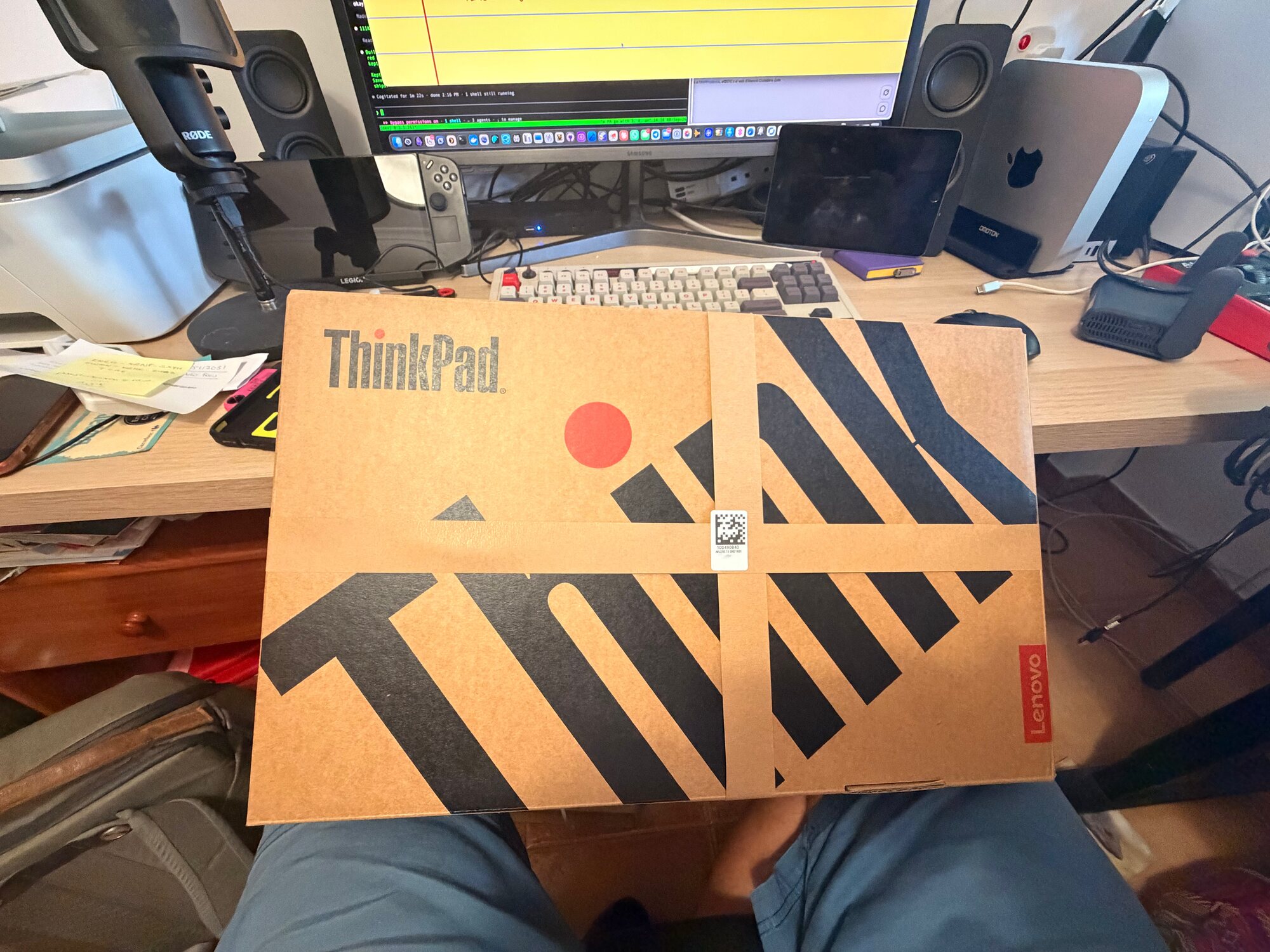
There's a moment before you hit enter on something like this — seven scripts, twelve live sites, real traffic — where you have to decide whether you trust the plan. I did. On Sunday morning after breakfast, I pushed a button on my laptop to kick off the migration, then took the kids to the beach for a few hours.
When I got back that evening, most of the heavy lifting had been done. Claude had updated DNS records via the web host's API, generated server configs, provisioned SSL certificates through Let's Encrypt, and kicked off deployments. I 'pushed a couple more buttons' before making dinner and by the time the kids were in bed, I was watching the last of the twelve sites sync to the new server.
Two things to note:
- This is the second week I've been running Claude in --dangerously-skip-permissions mode for large projects, which allows me to step away. But only when there's a solid plan in place that I'm comfortable with.
- I could have connected to Claude Code from my phone at the beach to see how things were going, and I consciously chose not to.
The real flex isn't being able to connect to any thing and any time from anywhere - it's knowing when you don't have to check in — and choosing the beach instead.
Infrastructure, not an app
I’ve been thinking about this differently over the past few months. The way I work with AI now doesn’t feel like using a tool. It feels more like sharing an operating system — my brain handles strategy and decisions, the AI handles execution and mechanical work, and we’re both operating from the same context, the same files, toward the same goals.
Co-operating because we work together. Operating system because it’s infrastructure, not an app you open when you need something clever.
The AI didn’t decide the migration architecture. It didn’t choose which domains to prioritise. It didn’t evaluate whether the VPS was the right move. What it did — and what it does well — is the mechanical layer. The DNS API calls, the nginx configuration, the certificate provisioning, the deployment commands — stuff that’s well-defined, repeatable, and frankly tedious to do by hand twelve times over.
But the moment that actually mattered — the connection between the VPS pricing research and the SSL cost problem — that happened because context compounds. My setup already knew about the VPS research from earlier in the day. When I hit the SSL wall on the new site, it didn’t start from zero. It had the afternoon’s research sitting right there, ready to connect.
That’s the difference between a system and a session. Most people use AI in sessions — one question, one answer, then start fresh next time. A system remembers, builds on itself, and sometimes connects two unrelated conversations into something neither of you planned for.
The last free issue
This is it — the last free edition of Signal Over Noise before the paywall goes live on March 4th.
If you’ve been reading along since the early days, thank you. Genuinely. Writing this newsletter in public for the past year and a half has forced me to articulate things I only half-understood, and the conversations that have come out of it — the replies, the questions, the “I tried this and here’s what happened” emails — have changed what I build and how I build it.
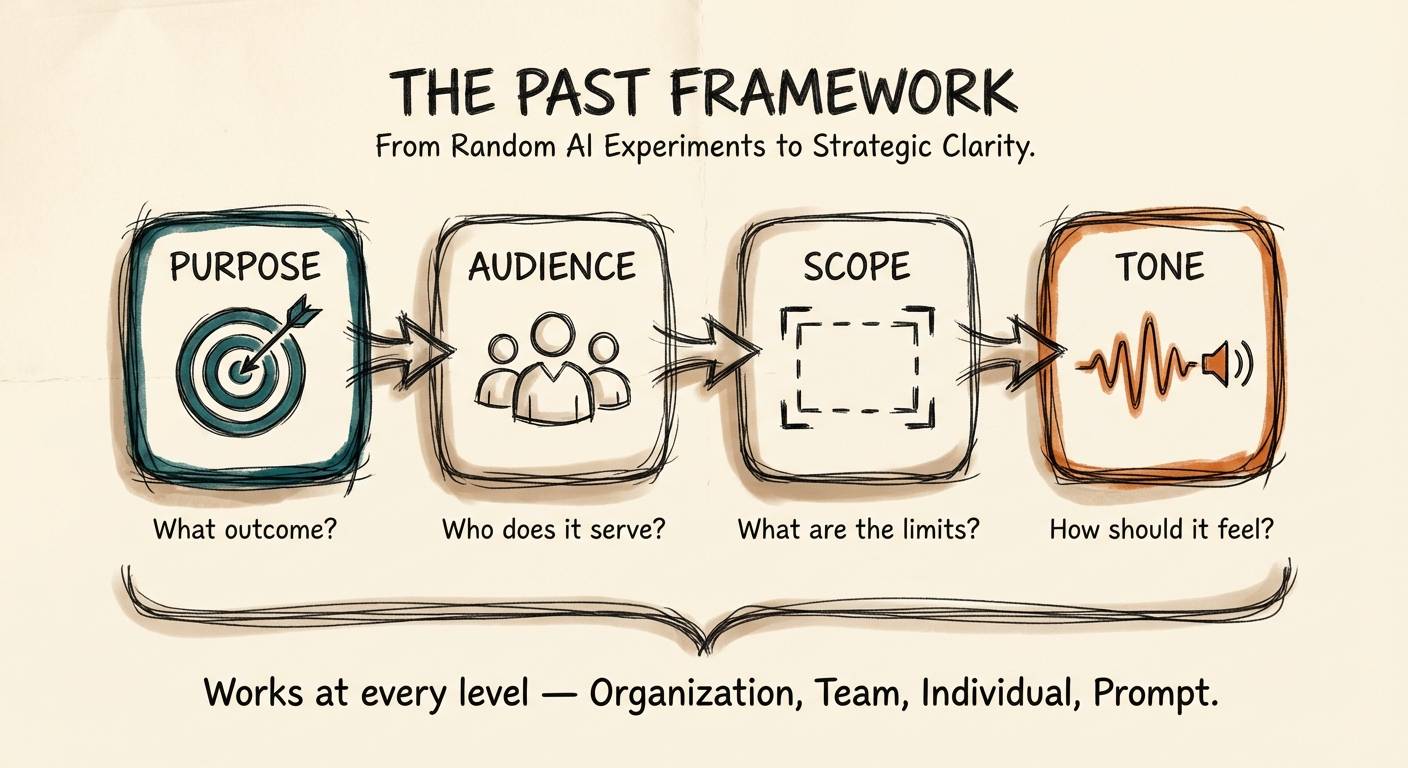
Also as a thanks I’ve open-sourced my PAST and SHAPE Frameworks for AI adoption and implementation. PAST tells you what and why. SHAPE tells you how and when. Together they take AI initiatives from scattered experiments to systematic implementation.
PAST
A thinking framework for AI adoption that works at every level: from organizational strategy down to individual prompt engineering.
|
|
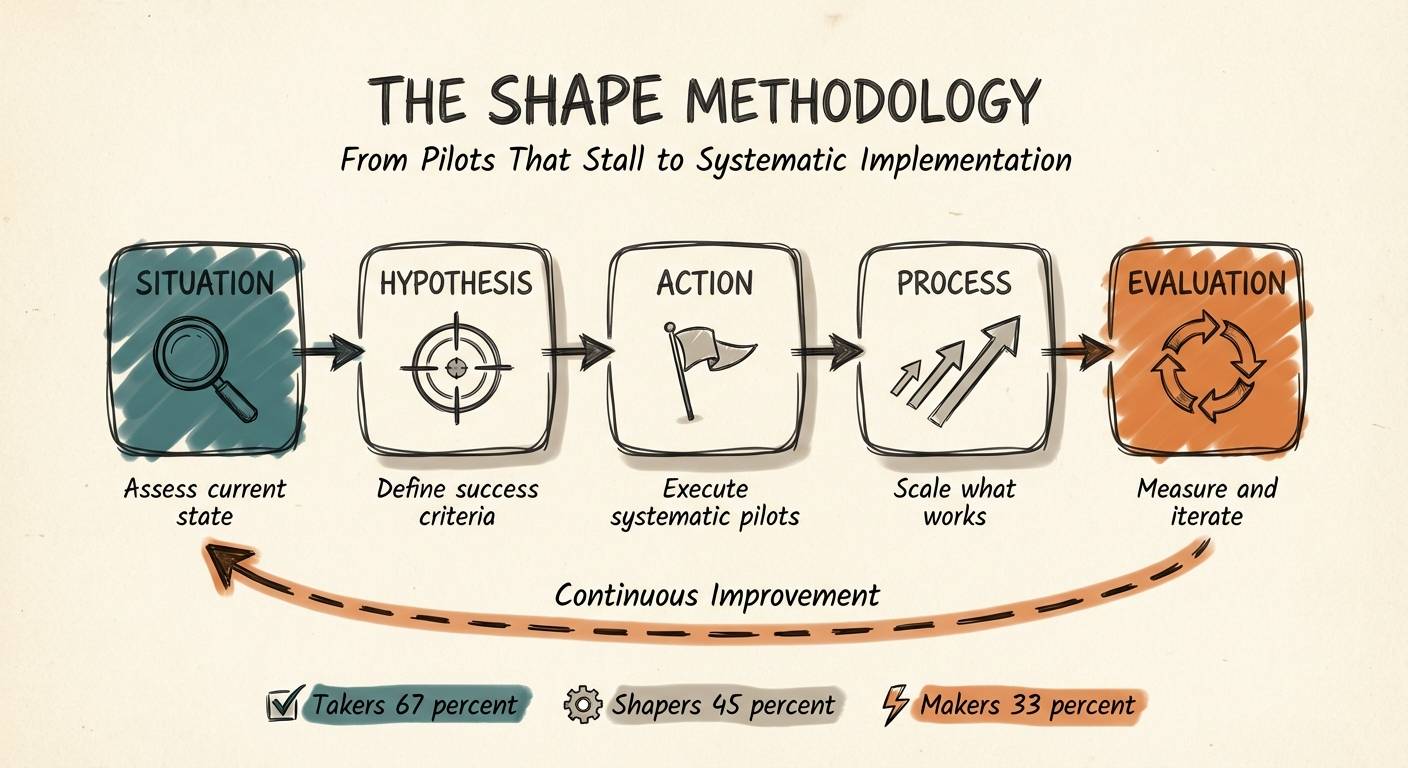
SHAPE
A five-phase execution framework that bridges the gap between strategy and results.
|
Here’s what’s next.
Signal Over Noise (paid, from March 4) continues with the strategic layer — tested frameworks, implementation patterns, the stuff that comes from eighteen months of building AI systems and being honest about what works and what doesn’t. Links to my Claude skills, agents and workflows and more. The Founding Member rate of €49/year is still available if you want to lock that in before March 4th. After that, it’s either €7 a month or €69 a year.
 |
€49.00 / year
Signal Over Noise — Founding Member
Weekly insights on AI implementation — what actually works, what doesn’t, and why. No hype, no sponsorships, no... Read more |
Why Paid?
Most AI newsletters are free because they’re monetized through sponsorships, affiliate deals, or selling you something else. That creates incentives to hype products rather than give honest assessments.
Signal Over Noise is reader-supported. The only incentive is to give you useful, honest information that helps you work better with AI.
Second Brain Chronicles is new, and it’s free. That’s where I build in public — the experiments, the weird automations, the vault architecture, the raw material before it becomes a framework. The frequency may be a little scattershot, but if you want to keep reading along without paying, that’s where to find me.
Or subscribe to both, I'm not your mom. ;-)
I don’t expect everyone to convert to paid, and that’s fine. I’d rather have readers in the right place than subscribers in the wrong one.
Until next time,
Jim